Items
Class
Image
-
 Seeds of Hope & Food for Future Since 2000s, work on documenting and reviving the organic natural farming of millets and vegetables, land development and traditional agricultural practices have been taken up. The millet revival efforts started along the north-eastern slopes of Nilgiris. The rich agro-diversity contributes to the nutritional and food security of the indigenous communities in the region and Keystone’s efforts have been towards encouraging locally sourced cultivated and uncultivated produce, that communities have immense knowledge of. Over the years, forest an agricultural species have been saved in seed banks at Keystone’s office and various field centres.
 -
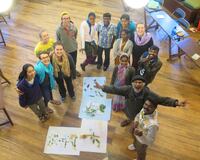 Commissioning the Nilgiri Field Learning Centre(NFLC) Launched in 2015, the Nilgiri Field Learning Centre is a collaboration between Keystone Foundation and Cornell University, born from the idea of a “field school.” Each semester blends bilingual, place-based learning with fieldwork across themes like Indigenous worldviews, ecology, governance and health. Bringing together Cornell students, Keystone practitioners and Adivasi students, the NFLC has shaped research, expanded Keystone’s programs, and influenced teaching and scholarship across both institutions.
 -
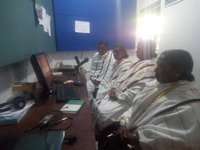 Radio Kotagiri goes on air In 2013, Radio Kotagiri 90.4 MHz became the Nilgiris’ first community radio station, broadcasting across a 15 km radius and amplifying voices of women, children, tea workers, farmers, migrants and Indigenous communities. It has played a key role in public awareness, from COVID-19 communication to programmes on biodiversity, livelihoods and social issues. Supported by volunteers and collaborators, the station builds local media skills and strengthens community-led storytelling across the Biosphere Reserve.
 -
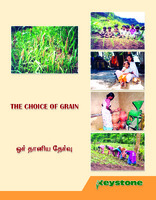 Field Guides of Forest Plants and Honey Trails in the Blue Mountains Publishing posters, books, field guides of what the Keystone team observed and recorded during field work in the Nilgiri biosphere reserVe. The field diaries of sociologists, economists, ecologists, gave way to numerous publications and knowledge products which have become foundational in shaping Keystone’s work.
 -
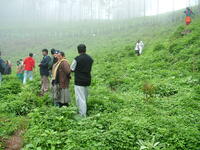 Happy Valley Restoration-Wetlands and Sholas Initiated in 2006, Happy Valley was one of Keystone Foundation’s earliest ecological restoration efforts, located just below the Kotagiri campus. Once overrun by invasive species such as Cestrum, Solanum and Lantana, the valley was revived through community support and the planting of 400 saplings covering 26 native shola species. Today, this restored patch has grown into a thriving forest, enriching biodiversity and strengthening the water sources vital to Kotagiri town.
 -
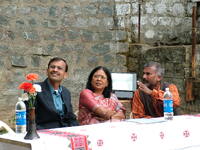 India’s first Bee Museum In 2006, Keystone Foundation opened India’s first Bee Museum in Ooty. This was a unique space celebrating native bees and the Indigenous communities who live alongside them. Inaugurated by Meena Gupta, then Secretary of Tribal Affairs, and marked by a surprise visit from two wild Apis dorsata colonies, the museum blended art, exhibits, and children’s activities to spark appreciation for local pollinators. Though it closed after the pandemic, its influence continues to inspire.
 -
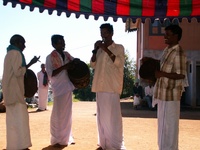 Hubba becomes a way of sharing and celebrating A first festival or hubba was held on 9th August 2005 on International Day of Indigenous Peoples, honoring the rich cultures of Nilgiri communities. Subsequently a honey festival or Jenu Hubba was held, followed by one on traditional ancestral boundaries. What began on the Kotagiri campus now thrives across Keystone’s field centres in the Nilgiri Biosphere Reserve, keeping traditions alive through song, dance, food, and collective celebration, themes that are important to indigenous identities.
 -
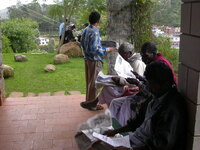 A newspaper for, by and of the Indigenous People In 2003, Kota, Kurumba, Irula and Toda community members decided they needed a way to share news across the Upper Nilgiris. Their consultation led to Nilgiri Seemai Suddhi, the region’s first Indigenous newspaper, created by community journalists. Printed quarterly and distributed to 235 villages, it covered festivals, livelihoods, public services and local needs, prompting timely government responses and giving tribal voices a powerful platform for collective action.
 -
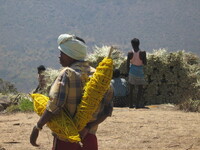 Forest surveys and studying honeybees in the wild, Through the “Bees, Biodiversity and Livelihoods” project, Keystone conducted extensive studies on bees in the wild. NTFP resource assessments across the Nilgiri Biosphere Reserve helped us understand the forest types. Using mixed social–ecological methods, surveys began with community mapping and ground-truthing walks that revealed the richness of wild foods, medicinal plants and sacred species. These findings guided the placement of value-addition units, strengthened local biodiversity knowledge, and generated field guides, datasets and research that continue to inform community action.
 -
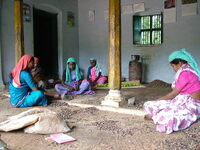 NTFP value addition centers take shape Keystone’s early work with Non timber forest produce (NTFP) lead to the setting up of village production centres in Semmanarai, Banglapdigai and Burliar. What began with fair pricing and simple processing soon expanded into tribal-owned units where women gained skills, elders shared traditions, and forest produce was valued at its source. This grassroots effort now sustains over 4,500 indigenous food producers across the Nilgiris.
 -
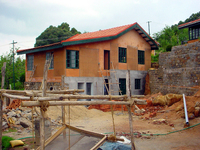 Rammed earth building construction begins Architects from Auroville were contracted for the project. Here’s what Anupama Kundoo, chief architect has to say: “The architecture of the campus began in 2000 with a site plan of small detached buildings. The site of the initial buildings on the very steep but narrow site, was an opportunity to build a campus of small separate buildings rather than a large institutional looking one. This strategy gave the campus a less intimidating look and integrating into the local context, giving out a strong message of development with low environmental impact.”
 -
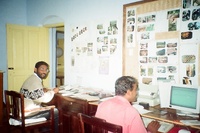 An office and a Green Shop open in kotagiri After travelling the length and breadth of Tamil Nadu, a decision was taken to set up office in Kotagiri in 1995 and to be a field based organization. Discussions with honey hunters, forest produce collectors and traditional millet growers lead to the linking of conservation, enterprise and livelihoods. In 1997, Keystone opened a small but significant outlet—the first Green Shop in Kotagiri, thereby bringing wild honey and traditional millets directly to people.
 -
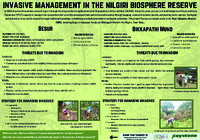 Invasive management in the Nilgiri Biosphere Reserve Strategies for managing invasive plant species in Wayanad and in Nilgiris which has two different forests and different species of plants invading these forests.
 -
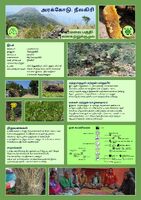 Aracode_CbMRV_TA Site profile of Aracode village panchayath
 -
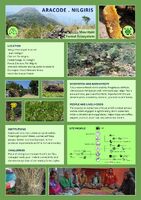 Aracode_CbMRV_EN Site profile of Aracode village panchayat
 -
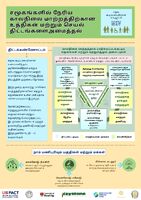 CbMRV-Overview_TA An overview of the community based measuring, reporting, verification protocol.
 -
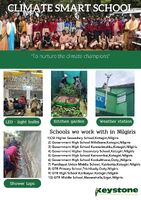 Climate Smart Schools With 10 schools in Tamilnadu, we engage our students with activities to provoke and encourage local knowledge. Also using the green infrastructure to connect with the curriculum like LED lights, weather station, kitchen garden and shower taps for an experiential learning.
 -
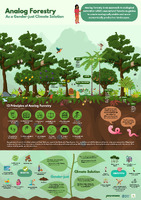 Analog Forestry a Gender Just Climate Solution- English, Tamil Analog forestry is an approach to ecological restoration that uses natural forests as a guide to create ecologically stable and socio-economically productive landscape
 -
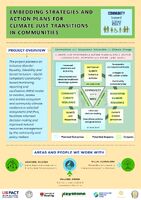 CbMRV overview An overview of the community based measuring, reporting and verification protocol
 -
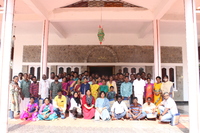 Barefoot Ecology Mahasabha 2021 BFE mahasabha conducted in Sigur (Mavanallah) where all the BFEs who have worked with us came together. Bhavya led the programme.
 -
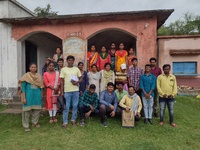 Barefoot ecology training_GAGGA_Eastern India Barefoot ecology training to community members in Easter India in 2022. Bhavya, Rohan and Asish lead the sessions.
 -
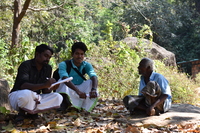 Lion tailed macaque project photos and video from Nilambur Lion tailed macaque project related photos from Nilambur. Photos showing the team- Ajesh M, Rajesh R and Asish doing the survey
 -
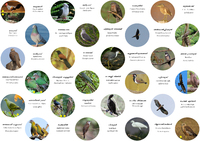 Birds of Nilambur Pocket Field Guide Pages Birds of Nilambur Pocket Field Guide created with copy left photos in the internet and ebird bird checklists of that region.
 -
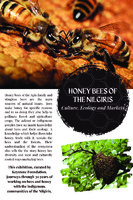 Bees posters_FAO A collection of posters focusing on Honey Bees was created for the HoneyBar event hosted by the FAO. These posters offer insights into different species of indigenous honey bees worldwide, exploring the art of beekeeping and its connections with native communities globally. The exhibition, curated by the Keystone Foundation, was enhanced with supplementary details on the native honeybee species found in the Nilgiris region.
 -
 Keystone 1993 - 2008 & Beyond_poster The document discusses the efforts of the Keystone Foundation in the Nilgiris region of Southern India, focusing on the intersection of biodiversity conservation, indigenous livelihoods, and cultural preservation. It highlights the foundation's work with tribal communities, particularly in beekeeping and the sustainable management of non-timber forest products, while addressing challenges such as political marginalization and the need for robust village institutions. The document emphasizes the importance of integrating local knowledge and practices into conservation strategies, fostering partnerships, and enhancing market access for marginalized groups. It also outlines the diverse ecosystems within the biosphere reserve and the potential for innovative approaches to improve livelihoods while ensuring ecological sustainability.