Items
Class
Image
-
 DRDR
DRDR
-
 BEES of India
-
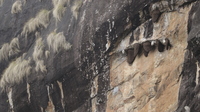 Hives on a cliff Photo of a few hives under a cliff
 -
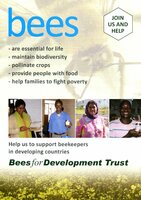 Bees for Development pamphlet_Shiny This photograph is from the bees for Development, it indicates the Bees are the essential for life, it maintains the diversity, pollinate the crops, it gives food to the people, and finally bees are helping people through financially to fight poverty.
 -
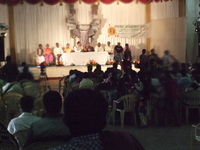 World Indigenous Peoples Day 2014 2014 the day was celebrated at Selma Hall in the town. By now the event was established amongst the community and the other mainstream people also. The government also recognised its importance and gave Rs. 1 lakh towards this event. In this meeting the HADP Director, Mr. Reddy was the Chief Guest. He also announced that the government had decided to build a centre for adivasis in Ooty and hold the event officially. There was some trouble in this event as Badagas were also invited for the Doddu Habba session, which was to tell stories about the gaur in their living memory and history. After this, Keystone stopped celebrating the day, and it was celebrated in Ooty along with government officials. A group from Kerala also performed during this event
 -
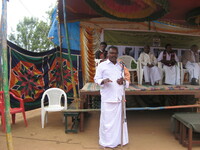 World Indigenous peoples day 2008 This year the celebration was held in the CSI school ground. There was a big crowd and the Nilgiris Minister Ellithorai Ramachandran was the chief guest. The celebration was full of speeches from leaders and appeals for the rights of adivasi people
 -
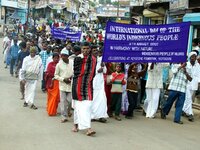 World Indigenous Peoples Day Since 2005 Keystone celebrated World Indigenous Peoples Day on 9th August every year. Community members from all regions came to the campus to celebrate. Inauguration using dhoopa, speeches, dances, songs and traditional food was the highlight of this day. In the earlier years a march was organised from the campus to bus stand or Nehru Park in Kotagiri.
 -
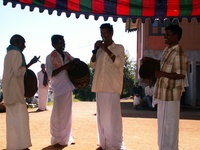 Arakol Atta, November 2005 Keystone was celebrating its 10th year and we had a discussion with community members about work and what aspects we could take up. One of the emerging themes was `cultural revival' as the people talked about lack of traditional leadership and social cohesion. Some people talked about lack of identity and the ability to follow rituals, customs and traditions. There were more mixed marriages, language was disappearing, songs and riddles of the past were unknown to the younger generation. This started the `Culture and People' program at Keystone which took up aspects for discussion and revival through festivals. One such festival was Arakol Atta for revival the skill of making drums and playing music. Bands came from all areas and everybody talked about the difference in Pillur music. Aracode, Banagudi, Baviyur, Sigur were represented. people exchanged issues related to continuing playing Arakol and displayed their talents. 5 new sets were distributed to the community groups after getting them made in Karamadai and with village artisans.
 -
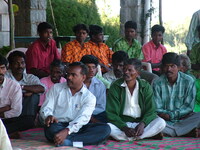 Jenu Hubba - February,2005 The first `festival' cum meeting held in Keystone was based on the theme of bees, honey and honey hunting. After the survey across the Nilgiris Biosphere reserve where we met many communities, we wanted to invite them to see our work and share their knowledge, tools and techniques amongst themselves. This was the first time many communities were seeing each other. Most were in awe of Cholanaikens, and there were Betta Kurumbas from Bandipur, Mullu Kurumbas and Kathnaickens from Wayanad. Sholiga, Alu Kurumba and Irulas from several regions were present to share their experiences. The snacks were traditional foods - the Keerai pori and honey was a favourite. Balasubramani, Krishna, L.Rajendran, P. Chandran and Murugesh played an important role in organising the event. Ajile Bottu, the art group painted their first flags for this festival.
 -
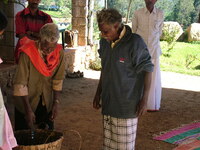 Sharing honey hunting techniques - Cholanaickens During the Jenu Hubba held at Keystone in 2005, we had many of the NBR communities represented. It was the first time that Cholanaickens from the New Amrambalam forests in Nilambur, travelled to Kotagiri and talked about their methods, tools and knowledge related to honey collection
 -
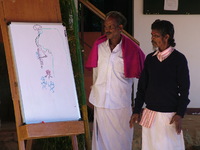 Sharing Techniques of Honey hunting Kurumba honey gatherers Mahalingam and Rasu shared their technique, social group and materials used for gathering honey at Jenu Habba held at Keystone Campus
 -
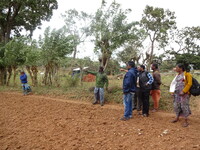 Demonstration on Inspecting the Field after PGS orientation meeting After the PGS orientation meeting, how to do field inspection was demonstrated in one of the farmers field.
 -
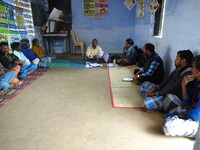 PGS Orientation Meeting in Mavanatham Organic certification was one of the Benefits in Conservation Agreement. Hence a meeting was called to create an awareness about PGS certification and the process, procedures.
 -
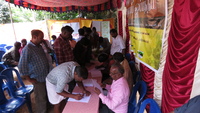 Village Communities Signing Conservation Agreement After 7 months of continous engagement phase with the 6 villages, few from each village came forward to be part of the conservation agreement. In consensus with the all the villages,a date was fixed to sign the agreement. This is the picture from that event and one individual from a family signed the agreement, and Robert Leo signed as a representative from Keystone Foundation.
 -
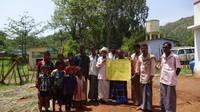 Conservation Agreement Designing Phase, Ramaranai This was a photograph taken during desiging phase of conservation agreement. After CA was drafted, the people who are ready to proceed with the agreement were got together and the photograph was taken. Ramaranai was the only kurumba village amongst other 5 irula villages under Conservation Agreement. Also this was the only village where whole village agreed to be part of conservation agreement.
 -
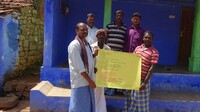 Conservation Agreement Designing Phase, Mavanatham This was a photograph taken during desiging phase of conservation agreement. After CA was drafted, the people who are ready to proceed with the agreement were got together and the photograph was taken. Mavanatham wanted to try with very few people in the beginning and later on many added in.
 -
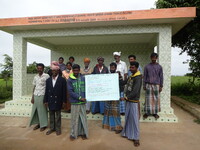 Conservation Agreement Designing phase, Itterai This was a photograph taken during desiging phase of conservation agreement. After CA was drafted, the people who are ready to proceed with the agreement were got together and the photograph was taken. Itterai was one of the toughest village to handle in terms of getting together people. As houses are very far and in different directions.
 -
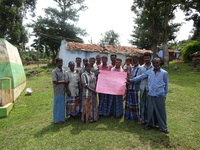 Conservation Agreement Designing phase, Galidhimbam This was a photograph taken during desiging phase of conservation agreement. After CA was drafted, the people who are ready to proceed with the agreement were got together and the photograph was taken. Galidhimbam had too many doubts in the beginning around conservation agreements. In the later times, Senior people like Anita came in and settled the doubts to take ahead the conservation agreement.
 -
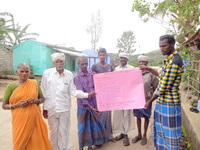 Conservation Agreement Designing phase, Thadasalatty This was a photograph taken during desiging phase of conservation agreement. After CA was drafted, the people who are ready to proceed with the agreement were got together and the photograph was taken. Thadasalatty showed much enthusiasm though in the pic not all people are present.
 -
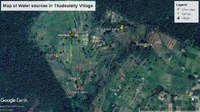 water resource map of Thadasalhatty It is a map of water bodies found in Thadasalhatty village.They are natural springs located inside village and bordering Forest.The reason to make the water inventory and map was to see how water conservation works can be taken up under conservation agreements.
 -
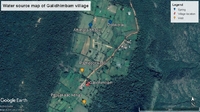 water resource map of Galidhimbam It is a map of water bodies found in the Galidhimbam Village.They are natural springs locate inside village and bordering forest. The reason to make the water inventory and map was to see how water conservation works can be taken up under conservation agreements.After the map was created, in Galidhimbam from Governement in total 8 water bodies were supported like wells and checkdams, which are not captured in the map.
 -
 Water resource map of Mavanatham It is a map of water bodies found in the Mavanatham Village. They are natural springs locate inside village and bordering forest. The reason to make the water inventory and map was to see how water conservation works can be taken up under conservation agreements.
 -
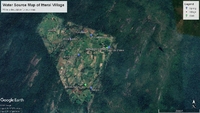 Water resource map of Itterai It is a map of water bodies found in the Itterai Village. They are natural springs and few are located near to naeri trees specifically.There is checkdam also mentioned in the map which were built long back. The reason to make the water inventory and map was to see how water conservation works can be taken up under conservation agreements.
 -
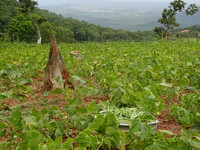 Beans field in Itterai It is a beans field in the month of May, which is the first season of agricultural season known as chitra maasa. Beans is the commercial crop grown in the area. It is mainly rainfed. Seeds are bought from market.
 -
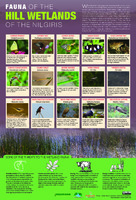 Poster on fauna of wetlands